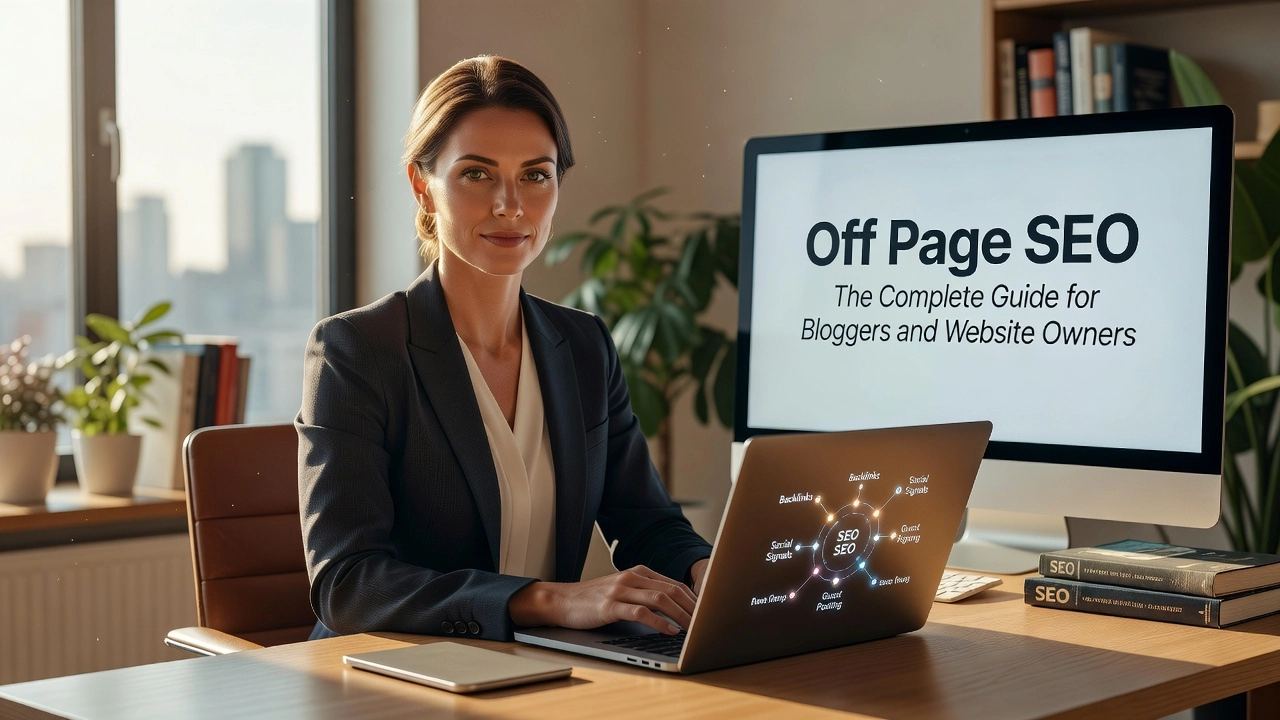
Off Page SEO: The Complete Guide for Bloggers and Website Owners
You’ve spent hours crafting the perfect blog post. The content is solid, the formatting is clean, and you’ve nailed your on-page SEO. But your traffic is still stuck in neutral. Sound familiar?
Here’s the thing most beginners don’t realize: getting found on Google isn’t just about what’s ON your website. What happens OFF your website matters just as much, and that’s exactly where off page SEO comes in.
Off page SEO refers to all the actions you take outside of your own website to boost your rankings in search engines. Think backlinks, social signals, brand mentions, and more. It’s the part of SEO that tells Google, “Hey, other people trust and vouch for this site!”
The good news? You don’t need to be a tech wizard to make it work. In this complete guide, we’re breaking down everything you need to know about off page SEO in a simple, beginner-friendly way. By the end, you’ll have a clear list of strategies you can start using right away to grow your online presence and climb those search rankings.
What Is Off Page SEO (And Why It Still Matters in 2026)
Think of off-page SEO as your website’s reputation in the wider world. It covers everything you do outside your own website to build authority, trust, and visibility with search engines. While you control what happens on your site, off-page SEO is really about getting others to vouch for you. Other websites linking to you, brands mentioning you, journalists citing you as a source, and people talking about you online all send powerful signals to Google that your site is worth paying attention to.
A simple way to remember the difference between on-page and off-page SEO is this: on-page SEO is what you say about yourself, and off-page SEO is what everyone else says about you. Your on-page work covers your content, keywords, headings, and site structure. Your off-page work is the external proof that backs all of it up. Google weighs both heavily, and relying on just one without the other will only get you so far.
Recommended Reading
You might be wondering whether any of this still matters now that AI is changing how people search. The short answer is yes, absolutely. Backlinks remain a major ranking factor in 2026, driving domain authority, referral traffic, and higher positions in search results. Organic search continues to deliver measurable ROI for businesses of all sizes, making off-page SEO one of the most valuable long-term investments you can make.
The overarching framework Google uses to judge all of this is called E-E-A-T, which stands for Experience, Expertise, Authoritativeness, and Trustworthiness. According to E-E-A-T: The Foundation of SEO Success in 2026, this framework is now considered the single most important quality signal influencing how Google evaluates content. Your off-page signals, such as editorial links, brand mentions, and expert citations, are the primary evidence Google uses to assess where you stand against each of those four pillars.
Here is something exciting worth flagging early. Off-page SEO has grown beyond Google in 2026. AI-powered tools like ChatGPT, Perplexity, and Google’s AI Overviews also use E-E-A-T-style signals to decide which sources they reference in their answers. Building strong off-page authority now helps your site appear in these AI-generated responses too, opening up a whole new traffic channel. We will dig into that in more detail later in this article.
The 3 Core Pillars of Off Page SEO
Now that you understand what off-page SEO is, let’s organise it into something you can actually work with. All off-page activity falls into three core pillars: Link Building, Brand Building and E-E-A-T Signals, and Local SEO and Trust Signals. Think of these as three buckets that cover every external action you can take to improve your site’s authority.
Here’s the part most beginners miss: these pillars aren’t separate boxes you tick one at a time. They constantly feed into each other. A podcast appearance, for example, earns you a backlink in the show notes (link building), increases branded searches for your name (brand building), and if the podcast has a local audience, it strengthens your local relevance too. One activity, three pillars ticked simultaneously.
For most bloggers and small site owners, link building is the right starting point. Research from Ahrefs found that 91% of web pages receive zero traffic from Google, with a lack of backlinks being the primary reason. That statistic alone makes off-page link building your first priority. However, as Google’s algorithms mature and AI-generated content floods the web, brand signals and E-E-A-T are becoming increasingly important differentiators between real authorities and thin-content sites.
The real value of this three-pillar model is using it as a quick self-audit checklist. Ask yourself: Am I actively building quality links? Have I established a recognisable brand presence? Is my local information accurate and consistent across the web? Wherever you answer no, that’s your gap and your next move.
Pillar 1: High-Quality Link Building
Let’s start with the golden rule of link building: quality beats quantity every single time. One editorial backlink from a trusted, niche-relevant website carries significantly more ranking power than hundreds of links from random directories. Google’s algorithms are sophisticated enough to tell the difference between a link that was genuinely earned and one that was manufactured. Think of it like a recommendation from an expert in your field versus a stranger handing out business cards on the street. Context, credibility, and relevance are everything.
So how do you actually earn high-quality links? There are three beginner-friendly methods worth knowing about.
Digital PR involves creating something genuinely useful, like original research, a survey, or a well-designed infographic, that journalists and bloggers in your niche actually want to reference. When they cite your work, you earn editorial backlinks from authoritative sources naturally.
The Skyscraper Technique is about finding top-ranking content in your niche that already has lots of backlinks, creating a better version of it (more detailed, more current, better formatted), and then reaching out to sites already linking to the original. Many will happily update their links to your improved resource. You can find practical guidance on this approach in resources like Link Building Strategies 2025: Authority Backlinks.
Broken link building means finding dead links on relevant websites and suggesting your content as a replacement. It is a win-win: the site owner fixes a problem, and you earn a quality backlink.
As you build links, tools like Squirrly SEO help you track whether your efforts are actually moving the needle. By monitoring keyword performance and content authority scores inside WordPress, you get real feedback on what is working rather than guessing.
One final warning before we move on: purchased link packages and link farms are a shortcut that Google actively penalises. We will cover exactly why in the black-hat section later in this post, so make sure you read that before buying any “100 backlinks for $10” deals you might spot online.
Pillar 2: Brand Building and E-E-A-T Signals
Backlinks are powerful, but Google doesn’t stop there. It also wants to know: are real, credible people behind this content? That’s essentially what E-E-A-T means in 2026. Standing for Experience, Expertise, Authoritativeness, and Trustworthiness, it’s the framework Google uses to judge whether your site deserves to rank. The off-page signals that feed this framework include brand mentions, author profiles, third-party citations, and editorial links. Think of it as external proof that a real expert is behind your content, not just an anonymous page full of text.
Unlinked brand mention conversion is one of the quickest wins you can grab right now. When someone mentions your brand or website without actually linking to it, set up a Google Alert for your brand name to catch these mentions as they happen. Then send a short, friendly email asking the site owner to add a hyperlink. Many will say yes simply because it’s an easy request. Even before you convert it to a link, that mention still contributes to your branded search volume and E-E-A-T signals, making the outreach a genuine double win.
Podcast appearances and video mentions are rising fast as off-page tactics, and for good reason. According to SEO expert Shaun Anderson, appearing on podcasts and YouTube channels simultaneously generates backlinks from show notes, earns branded mentions, and directly signals real-world expertise to Google. For beginners, even small niche podcasts are worth pitching.
For affiliate bloggers and AdSense publishers specifically, building E-E-A-T through niche citations is especially valuable. Being referenced in roundups, forums, or industry posts, even without a link, increases branded search queries over time. More people searching your brand name directly tells Google your site has genuine authority, which correlates with stronger rankings across your content.
Pillar 3: Local SEO and Trust Signals
Here’s something a lot of bloggers miss: local SEO isn’t just for plumbers and dentists. If you write a food blog covering restaurants in your city, run a regional parenting site, or offer freelance services to clients in a specific area, local SEO strategies for 2026 are genuinely relevant to you. Appearing in location-based searches means reaching high-intent readers and clients who are actively looking for exactly what you offer.
The foundation of local off-page SEO is NAP consistency, which stands for Name, Address, and Phone number. These three pieces of information need to match exactly across every directory, listing, and citation where your business appears. If your address is slightly different on Yelp versus your Google Business Profile, search engines get confused and your credibility takes a hit. Google uses these citations to verify that your business is legitimate, so consistency matters more than the sheer number of listings you have.
Reviews are another powerful trust signal that feeds into both local rankings and broader E-E-A-T. Actively earning reviews by following up with clients or adding a simple QR code to your emails, and then responding to every review (yes, even the tricky ones), shows Google and real people that you are engaged and trustworthy.
Finally, building citations across reputable business directories is one of the quickest off-page wins available to small business owners and bloggers. Start with authoritative platforms like Google, Bing Places, Yelp, and your local Chamber of Commerce. A small number of accurate, high-quality listings will always outperform dozens of inconsistent or spammy ones.
15 Off Page SEO Tactics That Work in 2026
Now that you know the three core pillars, let’s get practical. Here are 15 proven off-page SEO tactics you can start using right now to build authority, earn better links, and grow your site’s visibility in 2026.
1. Guest Posting
Guest posting means writing a valuable article for another blog in your niche in exchange for an author bio with a link back to your site. It still works brilliantly in 2026, but only when you do it properly. The golden rule is to target sites with genuine editorial standards, real audiences, and content that people actually read. Avoid sites that accept literally anything from anyone with no quality checks; Google has gotten very good at spotting link scheme patterns, even when they’re dressed up in clean formatting. A well-placed guest post on a respected blog in your niche builds credibility, drives referral traffic, and earns you a contextually relevant backlink all at once.
2. Niche Edits (Link Insertions)
A niche edit, sometimes called a link insertion, is when you reach out to the author of an existing, already-published article and politely ask them to add a contextual link to your relevant content. Because the target page has already been indexed and has accumulated link equity over time, niche edits can actually be stronger than a brand new guest post. They are also quicker to arrange. The key is relevance; your content must genuinely add value to the existing article, not just slot in awkwardly. Think of it as asking to join a conversation that is already happening rather than starting one from scratch.
3. Digital PR and Data-Driven Content
If you want to earn high-authority editorial links without sending thousands of cold outreach emails, digital PR is your best friend in 2026. The idea is to publish something genuinely newsworthy: an original survey, a mini-study, a useful infographic, or a data-driven report that journalists and bloggers in your niche will naturally want to cite. When you give writers a ready-made headline and a quotable statistic, you become a source rather than a sender of cold pitches. Make your methodology visible, use charts and bullet summaries to help people skim quickly, and write short, quotable statements that are easy to copy into an article. This is widely considered a tier-one off-page tactic right now because it scales without spamming.
4. Broken Link Building
Broken link building is one of those tactics that feels almost too simple. You find pages on authoritative sites in your niche that contain outbound links pointing to dead or removed pages, then you contact the site owner to let them know, and suggest your own relevant content as a replacement. It works because you are solving a real problem for the site owner rather than just asking for a favour. Free tools like Check My Links or Ahrefs’ broken link checker can help you find these opportunities quickly. You can explore current off-page SEO techniques that still work in 2026 for further context on how this fits into a broader strategy.
5. HARO-Style Media Queries
HARO (Help a Reporter Out) has evolved and rebranded over the years, with platforms like Connectively, Qwoted, and Featured.com now filling similar roles. The concept is simple: journalists post requests for expert sources, and you respond with a genuinely helpful quote or insight. If your response is selected, you earn a backlink from a credible publication and a real-world citation that directly supports your E-E-A-T signals. Even one placement in a respected industry publication can make a meaningful difference to how Google perceives your authority. The trick is to respond quickly, stay on-topic, and lead with your most useful insight rather than a sales pitch.
6. Podcast Guesting
Getting on podcasts in your niche is one of the most underrated off-page tactics for bloggers and affiliate marketers. Most podcast hosts include a link to their guest’s website in the show notes, which earns you a genuine editorial backlink. Beyond the link itself, podcast appearances build brand mentions, signal real-world expertise, and get your name in front of engaged audiences who already trust the host. Directories like Podchaser and Listen Notes are great starting points for finding relevant shows to pitch. This tactic is particularly powerful if you are building a personal brand alongside your site, since it puts a real voice and personality behind your content.
7. Unlinked Brand Mention Conversion
Every time someone mentions your brand or website online without adding a hyperlink, you have a missed backlink sitting right there waiting to be claimed. Set up Google Alerts or use a tool like Ahrefs Alerts to monitor your brand name, and whenever you spot an unlinked mention, send a friendly email to the author thanking them for the mention and asking if they would mind adding a link. Most people are happy to oblige because they already like your content enough to reference it. This is one of the highest return-on-effort activities in off-page SEO because the hardest part, getting someone to notice and value your work, has already happened.
8. Forum and Community Links
Participating in niche forums, Facebook Groups, Reddit communities, and WordPress-specific spaces like the WordPress.org support forums can earn you profile or in-thread links back to your site. Each individual link carries modest authority on its own, but collectively they contribute something really important: link profile diversity. A natural-looking link profile includes links from a variety of sources, and forum participation helps achieve that. The non-negotiable rule here is to be genuinely helpful first. Dropping links without contributing real value is a fast track to getting flagged as spam, both by the community and by Google.
9. Q&A Platform Links
Answering questions on niche Q&A platforms works on the same principle as forum participation, but with a slightly different dynamic. When someone asks a question that your content directly answers, a well-placed link genuinely helps the reader. Prioritise quality over volume every time; three thoughtful, detailed answers with relevant links are far more valuable than thirty rushed replies with shoehorned URLs. Gratuitous linking on these platforms tends to get tagged with UGC attributes or removed entirely, so always lead with the answer and add the link only when it is the natural next step for the reader.
10. Resource Page Link Building
Resource pages are curated lists that high-authority sites publish to help their audience find the best tools, guides, and references on a topic. Getting your content listed on one of these pages is a great way to earn a strong, editorially placed backlink. Search for them using queries like “best resources for [your niche]” or “useful links [your topic]” and then send a personalised pitch explaining specifically why your content adds something the existing list is missing. Personalisation is everything here; a generic outreach email will be ignored, but a specific, value-focused pitch has a genuinely good chance of landing.
11. Influencer Collaborations and Link Partnerships
Teaming up with other content creators in your niche for co-written posts, joint webinars, or expert roundups is a natural way to generate cross-links without anything feeling forced or transactional. Both parties have a real reason to promote the shared asset, which means the resulting links are editorially genuine. Just make sure you are transparent about any sponsored or affiliate relationships within these collaborations. Clean disclosure is not just an ethical requirement in 2026; it is an actual trust signal that Google and your audience both respond to positively.
12. Event Sponsorship and Scholarship Links
Sponsoring a niche virtual summit or creating a small scholarship fund for students in a relevant field can earn you links from event pages and university domains. These links are among the highest-authority you can earn because they come from institutional sources with no commercial incentive to link to just anyone. You do not need a massive budget to make this work; even a modest sponsorship of a niche online event can secure a genuinely valuable placement. Think of it as investing in your site’s credibility rather than just paying for a link.
13. Social Sharing and Content Amplification
Social media links are typically no-follow, meaning they do not pass direct link equity, but that does not make social sharing irrelevant to off-page SEO. High share volume increases the chances of your content being discovered by journalists, bloggers, and site owners who might then link to it editorially. Think of social amplification as the distribution layer that feeds all your other off-page tactics. The more people who see your content, the more opportunities you create for organic links to happen naturally. Platforms like Pinterest, LinkedIn, and even niche Facebook Groups can drive significant referral traffic alongside the indirect SEO benefit.
14. Video and YouTube Mentions
YouTube is not just a video platform; it is the world’s second-largest search engine and an increasingly important input for AI-generated answers across tools like Google AI Overviews and Perplexity. Creating videos or appearing as a guest in niche YouTube content earns you links in video descriptions and transcripts, while also building brand visibility across what is now called “Search Everywhere Optimisation.” Even a short expert contribution to someone else’s video can generate a show-notes link and put your name in front of an entirely new audience who may later search for you directly.
15. Brand Partnerships and Co-Marketing
Collaborating with complementary brands, tools, or services for joint case studies, interviews, or co-authored guides generates natural editorial links while simultaneously extending your reach to new audiences. Because both parties have a genuine stake in promoting the shared content, these links tend to be contextually relevant and long-lasting. In 2026, brand co-occurrence signals, where your name appears alongside credible, trusted entities, are increasingly influencing both traditional search rankings and whether your brand gets surfaced in AI-generated answers. Building authentic partnerships is not just good marketing; it is a compounding off-page SEO strategy.
Off Page SEO for AI Search: The GEO Angle
You’ve heard a lot about backlinks and brand mentions so far. But there’s a newer dimension to off-page SEO that you really can’t ignore in 2026, and it goes by the name GEO: Generative Engine Optimisation.
In plain terms, GEO is the practice of building your off-page presence so that AI-powered search tools like Google AI Overviews, ChatGPT, and Perplexity actually cite or reference your content inside their generated answers. If traditional SEO is about ranking on page one, GEO is about being part of the answer itself. That’s a meaningful difference, especially when you consider that an estimated 69% of searches now end without a click at all. If the AI answer cites your content, you get the visibility even when users never scroll further.
Why GEO Is Still an Off-Page Authority Problem
Here’s the reassuring part: GEO isn’t a completely separate discipline you have to learn from scratch. AI engines decide which sources to cite based on the same trust signals that drive traditional rankings. That means backlink profiles, brand mentions, and E-E-A-T signals all feed directly into your GEO visibility. Around 76% of URLs cited in Google AI Overviews already rank in the top 10 organic results, so your off-page work is doing double duty. The catch is that tools like ChatGPT and Perplexity cast a wider net and draw from a broader source pool, so strong traditional SEO alone doesn’t guarantee AI citations across every platform.
Practical Steps to Improve Your GEO Visibility
There are three things you can focus on right now as a blogger or small site owner.
- Earn citations from trusted sources. Established publications, industry databases, and authoritative community platforms carry the weight that AI engines look for when deciding who to quote. Think of it as PR meets SEO.
- Build a consistent brand presence across platforms. AI engines assess your entity signals across social profiles, forums, and media mentions, not just your website. Showing up consistently in multiple places signals that you are a real, recognised brand.
- Write in a quotable, answer-first format. AI systems extract specific passages to synthesise their answers. Short, precise paragraphs that directly answer a single question are far more likely to survive that process intact.
One important warning before you go any further: black-hat tactics targeting LLM training data are already emerging, and they carry serious risks. That topic deserves its own spotlight, which is exactly what the next section covers.
The good news is you don’t need expensive specialist tools to get started with monitoring. The free SEO tools available at brianhillier.co.uk can help you track where your brand is already being mentioned across traditional search. Pairing that with a simple check of your GA4 referral traffic for visits from AI platforms gives you a solid, no-cost picture of your current GEO footprint.
Free Tools to Manage Your Off Page SEO
You don’t need to spend a penny to get started with off-page SEO monitoring. Here are six free tools that give you a solid foundation before you even think about upgrading to a paid platform.
1. Google Search Console
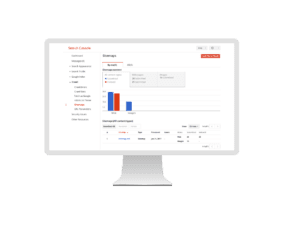
This is your non-negotiable starting point. Google Search Console lets you see exactly which external websites are linking to you, which of your pages are earning the most backlinks, and whether Google has applied any manual actions to your site’s backlink profile. It’s free, it’s directly from Google, and the data it provides is genuinely authoritative. Head to the Links report inside your dashboard and you’ll immediately get a clearer picture of your current off-page standing.
2. Google Alerts
Set up a free Google Alert for your brand name, your domain, and any key topics you cover. Whenever someone mentions you online, you get an email notification. The clever bit is using those alerts to spot unlinked mentions, occasions where someone has referenced your brand without actually linking to you. A quick, friendly outreach email asking them to add a link can turn a passive mention into a genuine backlink.
3. Ahrefs Webmaster Tools (Free Tier)
Verify your site on Ahrefs Webmaster Tools and you unlock a surprisingly capable free backlink audit. You can track new and lost links, spot potentially toxic backlinks, and monitor your Domain Rating over time, all without paying a subscription fee. It won’t let you spy on competitors, but for monitoring your own profile it’s excellent.
4. Bing Webmaster Tools
Most people skip this one entirely, which is a mistake. Bing Webmaster Tools provides independent backlink data that often differs from Google’s view, giving you a fuller picture. It’s also increasingly relevant because Bing powers several AI search products, so keeping an eye on your presence there is becoming genuinely worthwhile.
5. brianhillier.co.uk Free SEO Tools
Before committing to any paid platform, check out the free SEO tools available at brianhillier.co.uk. They’re designed specifically to support tasks like off-page monitoring and keyword tracking, making them a practical first stop for bloggers and small business owners who want results without the overhead.
6. Squirrly SEO (WordPress Plugin)
If your site runs on WordPress, Squirrly SEO is worth installing. While it’s primarily known as an on-page tool, its keyword performance tracking features serve a really useful off-page purpose: showing you whether your link-building efforts are actually shifting your rankings. Without that feedback loop, it’s hard to know what’s working.
What to Avoid: Black Hat Off Page Tactics in 2026
Now you know what works, it’s just as important to know what to avoid. These tactics might promise shortcuts, but in 2026 they carry serious risks that simply aren’t worth taking.
1. Purchased Link Packages and PBNs
Buying bulk backlinks from link farms or private blog networks is a direct violation of Google’s guidelines. Algorithms can detect unnatural link patterns quickly, and the consequences are severe. Manual penalties can cut your organic traffic by as much as 80% overnight, and in worst-case scenarios, your site can be deindexed entirely. When you factor in the cost of quality PBN domains, hosting, and content, you could have invested that same budget into legitimate guest posting and digital PR, building real authority that actually lasts.
2. Spammy Directory Submissions
Mass-submitting your site to hundreds of low-quality directories is a waste of time in 2026. Rather than building authority, it dilutes your link profile and signals low-quality behaviour to search engines. A much smarter approach is to identify five to ten legitimate, human-edited directories that are genuinely relevant to your niche and focus your energy there instead.
3. Automated Social Sharing and Bot Traffic
Using bots to inflate social signals or simulate clicks creates a misleading picture of your audience engagement. Google is actively detecting unnatural click-through patterns, and triggering those algorithmic quality filters can quietly suppress your rankings without any formal warning.
4. Black-Hat LLM Manipulation Tactics
This is a newly emerging threat in 2026. Some site owners are attempting to artificially seed LLM training data with manipulated brand mentions or fabricated citations. Beyond being ineffective long-term, these tactics risk serious reputational damage and potential removal from AI platforms that are actively developing their own content quality filters.
5. Anchor Text Over-Optimisation
Stuffing exact-match keywords into every backlink anchor text is a classic red flag that triggers algorithmic scrutiny. A natural link profile includes branded anchors, generic phrases like “click here,” and partial-match variations. Keeping your anchor text diverse signals authenticity and keeps your profile looking earned rather than engineered.
Frequently Asked Questions About Off Page SEO
Got some burning questions about off-page SEO? You’re not alone. Here are the five questions beginners ask most often.
What is the difference between on-page and off-page SEO?
On-page SEO covers everything you directly control on your own website: your content, meta titles, headings, site speed, and internal links. Off-page SEO covers everything that happens outside your website, like backlinks, brand mentions, and your reputation across the web. A helpful way to think about it: on-page SEO is decorating your house, and off-page SEO is what the neighbours say about it. Both matter, but without a solid on-page foundation first, off-page efforts will struggle to deliver results.
How long does off-page SEO take to show results?
Patience is genuinely required here. Link building and brand mention campaigns typically take three to six months to produce noticeable ranking movement, though a placement on a high-authority site can speed that up. The bigger lesson is that consistency beats intensity every time. A steady stream of quality activity compounds over months and years, which is far more valuable than one big push followed by silence.
Do social media links count as backlinks?
Not in the traditional sense. Social media links are almost always nofollow, meaning they do not pass direct ranking power to your site. However, sharing content on social platforms increases its visibility significantly, and wider visibility means more people discover it. When the right person finds your content, they may link to it from their blog or website, earning you a genuine editorial backlink organically.
Is off-page SEO still relevant with AI search?
Absolutely, more so than ever. AI tools like ChatGPT, Perplexity, and Google AI Overviews actively prioritise sources with strong backlink profiles and solid E-E-A-T signals when deciding what to cite. Google AI Overviews now appear on over 60% of commercial searches, so being seen as a trustworthy, authoritative source directly improves your chances of appearing in those results.
How many backlinks do I need to rank?
There is no magic number. Ranking depends entirely on how competitive your specific keyword is. Ten high-quality links from relevant, authoritative sites will outperform hundreds of low-quality ones. Focus on earning fewer, better links rather than chasing a target count that does not exist.
Final Thoughts: Building Off Page Authority One Step at a Time
You’ve covered a lot of ground in this guide, so let’s bring it all together. Off-page SEO rests on three core pillars: high-quality link building, brand building and E-E-A-T signals, and local SEO and trust signals. Master those three areas and you have a solid foundation that search engines reward over time.
The key word there is time. Off-page SEO is a long game, and consistency always beats shortcuts. Sites that invest steadily in earning real links, building genuine authority, and managing their reputation are the ones still growing six months from now.
Here’s your practical first step for this week: set up Google Alerts for your brand name and run a free backlink audit inside Google Search Console or Ahrefs Webmaster Tools. Both are completely free and give you an honest picture of where you stand right now.
From there, pick one tactic and commit to it. Guest posting or broken link building are both excellent starting points for bloggers and small site owners. Don’t try to tackle all 15 tactics at once.
Head over to brianhillier.co.uk for free SEO tools and resources to support your efforts. Squirrly SEO is also worth using as a practical companion for tracking whether your link building activity is actually converting into real ranking improvements.
Off-page SEO remains one of the most powerful levers available to website owners in 2026. Start small, stay consistent, and the results will follow.